The 0.01% Wink That Found 6,000 Worlds
A planet is a barely noticeable flicker. When an Earth-sized world passes in front of its star, the star dims by about 0.01% — the equivalent of watching a 100-watt bulb lose 0.01 watts from across…
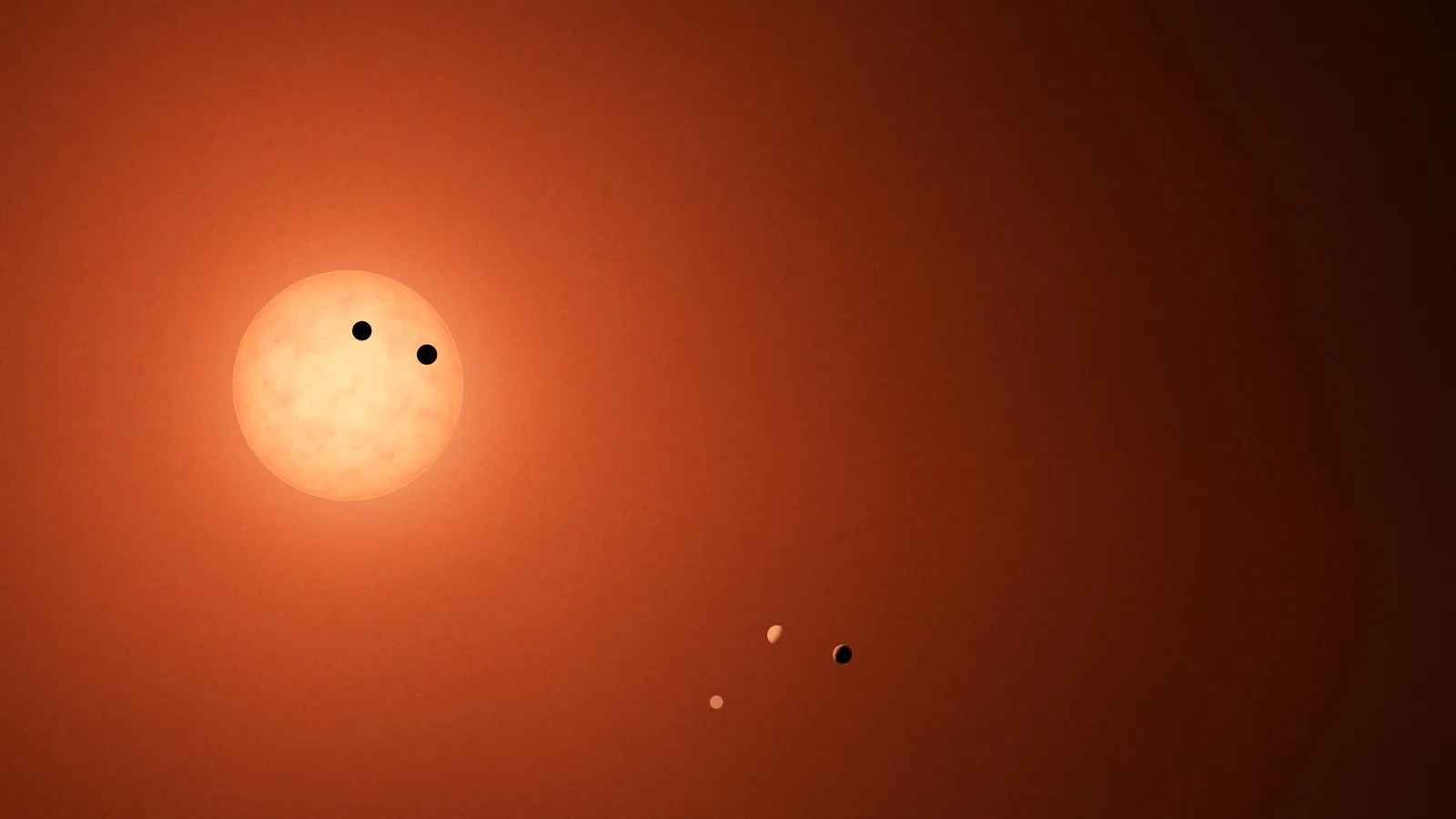
A planet is a barely noticeable flicker. When an Earth-sized world passes in front of its star, the star dims by about 0.01% — the equivalent of watching a 100-watt bulb lose 0.01 watts from across the street.
And yet, that flicker has found nearly 6,000 exoplanets. The method is called the transit method. 🔭
How it works
If a planet's orbit happens to be edge-on to us, it periodically crosses the star's face and blocks a sliver of light. The star's brightness dips in a clean "U" shape: the depth tells you the planet's size relative to the star, the duration tells you the orbital geometry. One dip is never enough — you need two or three repeats to rule out stellar pulsations and instrument noise. That's the origin of the method's built-in bias: it loves fast planets.
Why the early finds were all hot Jupiters
Blocking power scales with area: a Jupiter-sized planet blocks ~1% of the star's light, an Earth-sized one only ~0.01%. And the edge-on geometry lines up for only about 1 in 200 Earth-like orbits. So the first discoveries were almost all big planets hugging their stars — orbital periods of days, confirmable within a few years.
The first transit ever seen was in 1999, on HD 209458b: the star dimmed ~1.5% for about 3 hours. For the first time astronomers had a planet's radius — combine it with mass from radial velocity (the technique that won the 2019 Nobel for the 51 Pegasi b discovery in 1995), and a planet could finally be fully described.
The Kepler revolution
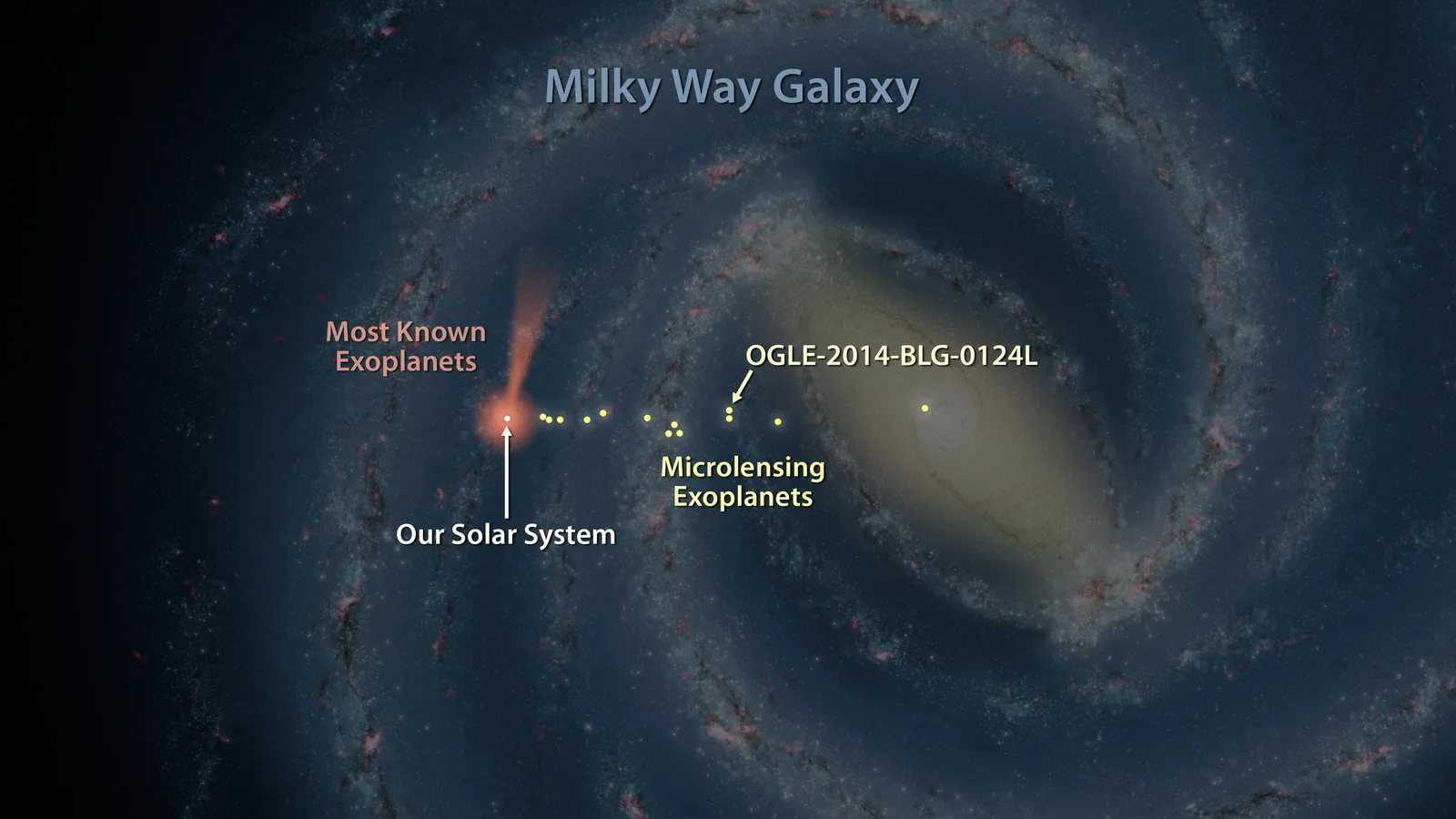
Launched in 2009, Kepler stared at ~150,000 stars in one patch of sky for nearly a decade and confirmed 2,700+ planets. It turned exoplanets from a curiosity into a census: planets aren't rare in the galaxy — they're the norm. Today's confirmed count stands near 6,000, and the transit method delivered most of them.
And then there's the atmosphere trick
During a transit, starlight grazes the planet's atmosphere before reaching us. Different molecules absorb different wavelengths — split that spectrum and you can "smell" the air. JWST made this technique actually work: in 2022 it confirmed CO₂ in WASP-39b's atmosphere. In 2023 it observed the rocky worlds of TRAPPIST-1 — 7 Earth-sized planets 39 light-years away, 3 in the habitable zone — and ruled out thick hydrogen atmospheres, supporting rocky or water worlds. It's the #1 target for biosignature hunting in the coming years.
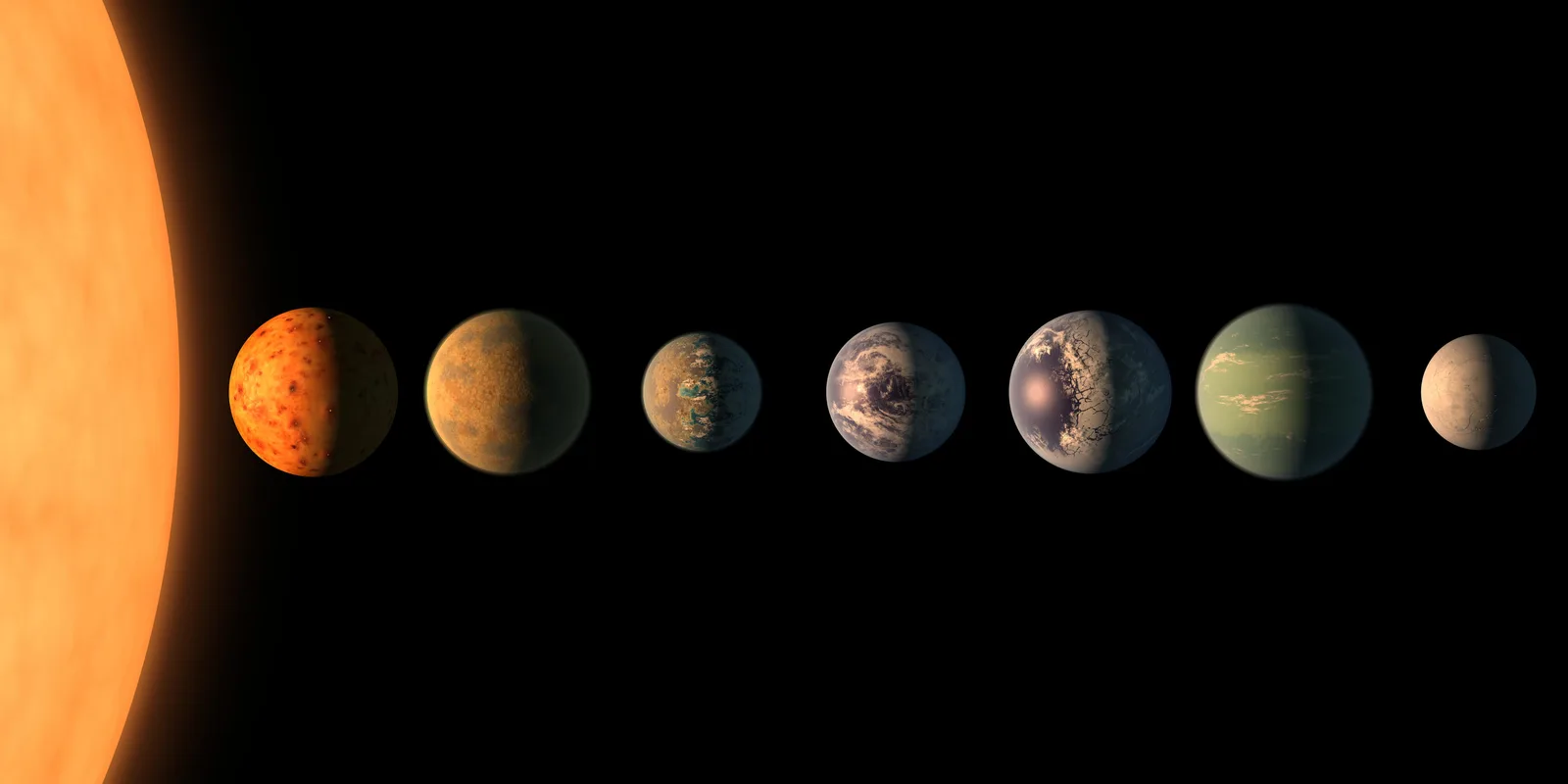
The transit method has a sweet tooth: it prefers big planets on short orbits, like noticing the tallest frequent flyer in an airport. But that's exactly why it could sweep so many candidates out of the dark.
Want to feel what "short period" means? In the Solar Explorer app, crank time acceleration to 1 week/second and watch Mercury complete its 88-day orbit while Saturn crawls through its 29.5-year lap — the reason transits keep finding the sprinters. (App Store: Solar Explorer)